Austin's jewelers since 1986 — we believe great diamond buying begins with great education. Whether you are just starting to explore or ready to choose a stone, this guide is your friendly, expert companion. And whenever you are ready, we are just a consultation away.
Every diamond is unique, and its beauty and value are determined by four fundamental characteristics known as the 4 C's: Cut, Color, Clarity, and Carat Weight. Established by the Gemological Institute of America, this universal grading system gives buyers a reliable framework for comparing diamonds and understanding what they are paying for.
At Diamonds Above, we believe that an educated buyer is a confident buyer. Since 1986, our Austin gemologists have guided thousands of couples through the diamond selection process — in person, at our Guadalupe Street showroom, with no pressure and all the time in the world. The sections below break down each of the 4 C's in detail, so you can walk into any conversation — especially ours — and speak the language of diamonds with confidence. Whenever you are ready to move from reading to experiencing, book a complimentary consultation and we will take it from there.
While all four characteristics matter, they do not carry equal weight in determining a diamond's visual appeal. As you will learn, the order of importance for most buyers is Cut > Color > Clarity > Carat, though personal preferences and budget will always play a role in your final decision.
Of all the 4 C's, cut is the single most important factor in determining how beautiful a diamond looks to the naked eye. Cut does not refer to a diamond's shape (round, oval, etc.) but rather to the precision of its facet arrangement, proportions, symmetry, and polish. A masterfully cut diamond acts like a system of mirrors, capturing light from above and reflecting it back to your eyes in the form of brilliance (white light), fire (spectral colors), and scintillation (sparkle).
When a diamond is cut too shallow, light leaks through the bottom and the stone appears glassy and lifeless. When cut too deep, light escapes through the sides and the diamond looks dark in the center. Only when proportions are precisely calibrated does light enter through the top, bounce between the internal facets, and return through the crown in a dazzling display.
The GIA grades round brilliant diamonds on a five-point cut scale. For fancy shapes (oval, cushion, etc.), there is no standardized cut grade, so proportions and symmetry ratings become even more important.
We recommend Excellent or Ideal cut grades whenever budget allows. The difference in cost between an Excellent and a Good cut diamond of the same size is far less dramatic than the difference in visual impact. A well-cut 0.9-carat diamond will often appear larger and more brilliant than a poorly cut 1.0-carat stone, making cut the one area where you should never compromise.
Beyond the GIA grade, look at individual measurements such as table percentage (the flat top facet relative to the diamond's diameter), depth percentage (total height relative to diameter), and crown angle. For round brilliant cuts, the ideal table ranges from 54% to 58%, with a depth between 61% and 62.5%. These proportions ensure maximum light performance.
Ask to see diamonds under different lighting conditions. A well-cut stone sparkles in any light—from the bright LEDs in a jewelry showroom to the soft candlelight at a restaurant. If a diamond only looks good under spot lighting, the cut may not be as strong as the grade suggests.
When gemologists talk about diamond color, they are actually measuring the absence of color. The most prized white diamonds are those that appear completely colorless, like a drop of pure water. As trace elements such as nitrogen become present in the crystal structure during formation, diamonds begin to show faint yellow or brown tints.
The GIA color scale runs from D (absolutely colorless) to Z (light yellow or brown). The differences between adjacent grades are incredibly subtle—often invisible to untrained eyes—but they can have a significant impact on price. A D-color diamond might cost 15–25% more than an otherwise identical G-color stone, even though the two are virtually indistinguishable when mounted in a setting.
For most buyers, diamonds in the G to I color range represent the best combination of beauty and value. These near-colorless grades face up white in virtually every setting style and lighting condition. You save substantially compared to D–F grades without any visible compromise.
Your choice of setting metal also affects how color is perceived. White gold and platinum settings make faint body color more noticeable because of the cool contrast. Yellow and rose gold settings, on the other hand, can mask warmth in the diamond, meaning you can comfortably choose an I or even J color stone and still enjoy a beautifully white appearance. This is one of the simplest ways to stretch your budget without sacrificing visual quality.
It is worth noting that the color grading scale applies specifically to white diamonds. Fancy colored diamonds—such as vivid yellows, pinks, and blues—are graded on an entirely different scale where more saturated color actually increases value. If a fancy color diamond interests you, our gemologists can walk you through that process during a custom design consultation.
Choosing a G or H color diamond instead of a D or E color can save you 20–30% on the stone alone. Redirect those savings toward a higher cut grade or a slightly larger carat weight for a more visually impressive result.
Diamonds form deep within the Earth under extreme heat and pressure over billions of years. During this process, nearly every diamond develops tiny natural imperfections. Internal characteristics are called inclusions—think of them as nature's fingerprints—while surface irregularities are called blemishes. Together, these features determine a diamond's clarity grade.
The GIA clarity scale evaluates diamonds under 10x magnification and ranges from Flawless (FL) to Included (I1–I3). While a Flawless diamond is extraordinary in its rarity, the practical difference between a Flawless stone and a VS2 stone is invisible to the naked eye. This is where the concept of "eye-clean" diamonds becomes your best friend as a buyer.
An "eye-clean" diamond is one where inclusions cannot be detected by the unaided eye when the stone is viewed face-up at a normal distance (approximately 6–12 inches). For the vast majority of round brilliant diamonds, grades of VS2 and SI1 are reliably eye-clean, which means you get a diamond that looks flawless in everyday viewing while paying significantly less than higher clarity grades.
The type and location of inclusions matter as much as the grade itself. A small crystal inclusion beneath the table facet (the flat top of the diamond) is more visible than the same inclusion tucked near the girdle (the outer edge). That is why we always recommend viewing a diamond's clarity plot on its GIA certificate or, better yet, examining the stone in person. At Diamonds Above, our gemologists use advanced imaging tools to show you exactly where inclusions are located, so you can make a confident decision.
Step-cut shapes like emerald and Asscher cuts have large, open facets that act like windows into the diamond, making inclusions more visible. For these shapes, we recommend stepping up to at least a VS2 clarity. Brilliant-cut shapes like round, oval, and cushion are more forgiving because their facet patterns scatter light and help conceal minor inclusions.
Avoid paying a premium for FL or IF clarity. The difference between a VVS1 and an SI1 diamond is only visible under 10x magnification by a trained gemologist—not by anyone admiring the ring on her finger.
Carat is the standard unit of measurement for diamond weight, where one carat equals 200 milligrams (0.2 grams). It is often the first characteristic buyers ask about, and while carat weight does correlate with physical size, the relationship is not perfectly linear. A 2-carat diamond does not look twice as large as a 1-carat diamond because the extra weight is distributed across three dimensions—width, depth, and length.
For round brilliant diamonds, the face-up diameter (what you see when looking at the ring from above) is the most meaningful size indicator. A 1.00-carat round diamond typically measures about 6.5mm in diameter, while a 1.50-carat stone measures approximately 7.4mm—only about 14% wider despite weighing 50% more. This is why cut quality matters so much: a well-proportioned diamond carries more of its weight in the crown, appearing larger than its carat weight might suggest.
| Carat Weight | Approx. Diameter (Round) | Notes |
|---|---|---|
| 0.50 ct | 5.1 mm | Elegant and budget-friendly |
| 0.75 ct | 5.8 mm | Noticeable presence without premium pricing |
| 1.00 ct | 6.5 mm | The most popular milestone weight |
| 1.50 ct | 7.4 mm | Statement size with strong finger coverage |
| 2.00 ct | 8.2 mm | Luxury tier, significant visual impact |
Diamond pricing is not a smooth curve. Prices jump sharply at popular weight milestones known as "magic numbers"—particularly at 0.50, 0.75, 1.00, 1.50, and 2.00 carats. A 1.00-carat diamond can cost 15–20% more than a 0.95-carat stone of identical quality, even though the 0.05-carat difference (one-tenth of a millimeter in diameter) is undetectable to the eye.
This creates one of the most powerful money-saving strategies in diamond buying: shop just below the magic numbers. A 0.90-carat or 0.95-carat diamond looks virtually identical to a 1.00-carat stone on the finger but can save you hundreds or even thousands of dollars. The same principle applies at every milestone—a 1.90-carat diamond is visually indistinguishable from a 2.00-carat stone but comes at a meaningful discount.
Also consider that different diamond shapes carry their weight differently. Elongated shapes like oval, marquise, and pear diamonds have a larger face-up surface area per carat compared to round diamonds, making them appear bigger at the same weight. If maximizing visual size is your priority, these fancy shapes offer exceptional value. Learn more about each shape in our diamond shapes guide below.
Shopping for a 0.90ct instead of a 1.00ct diamond can save you 10–20% while looking identical on the hand. Pair this with an elongated shape like oval or marquise for an even larger visual footprint.
Our GIA-certified gemologists live for this stuff. No question is too basic, no detail too small.
A diamond's shape is a matter of personal style. Each shape has its own character, brilliance pattern, and aesthetic. Explore the nine most popular shapes to find the one that speaks to you.
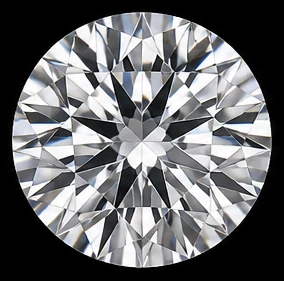
The most popular diamond shape with 58 facets engineered for maximum brilliance. Accounts for over 60% of all diamonds sold worldwide.
A square shape with brilliant-cut faceting that delivers exceptional sparkle. Its pointed corners create a modern, geometric aesthetic.
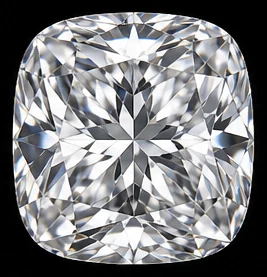
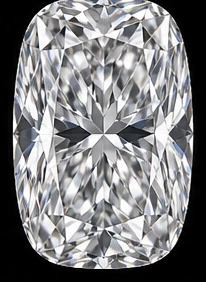
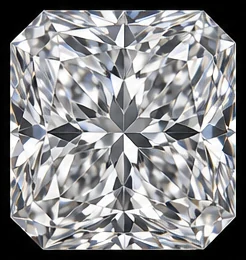
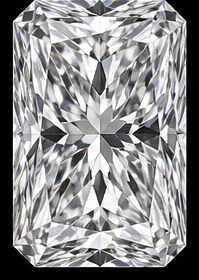
A softly rounded square or rectangle with large facets that produce broad flashes of light. Combines vintage charm with modern brilliance.
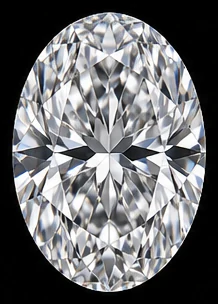
An elongated shape that maximizes surface area per carat, making it appear larger on the finger. Its lengthening effect is universally flattering.
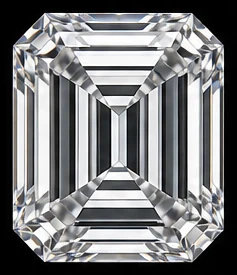
A rectangular step-cut shape prized for its elegant hall-of-mirrors effect. Its clean lines emphasize clarity and create a sophisticated, understated look.
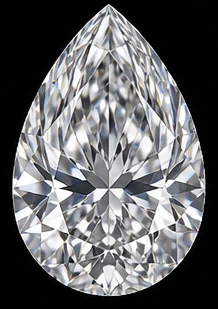
A teardrop shape that blends the brilliance of a round with the elegance of a marquise. Versatile for rings, pendants, and earrings alike.
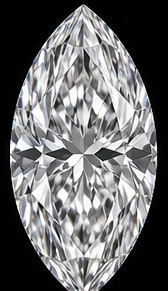
A dramatic, elongated shape with pointed ends that creates the largest face-up area of any diamond shape. Makes fingers appear longer and more slender.
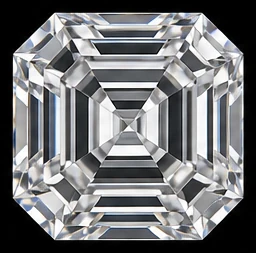
A square step-cut with cropped corners and a deep pavilion that draws the eye into the diamond. An Art Deco icon with mesmerizing depth.
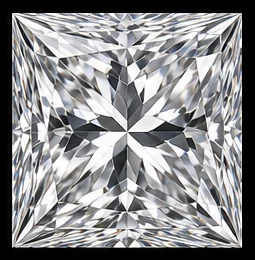
A trimmed-corner rectangular or square shape with brilliant-cut faceting for intense sparkle. The best of both worlds: geometric lines with fiery brilliance.
One of the most common questions we hear at Diamonds Above is whether lab-grown diamonds are "real." The short answer: absolutely. Here is everything you need to know to make the right choice for you.
Lab-grown diamonds are created in controlled laboratory environments using one of two processes: High Pressure High Temperature (HPHT) or Chemical Vapor Deposition (CVD). Both methods replicate the natural conditions that produce diamonds deep within the Earth, resulting in stones that are chemically, physically, and optically identical to their mined counterparts. They share the same carbon crystal structure, the same hardness (10 on the Mohs scale), and the same refractive index that produces diamond's legendary brilliance.
From a grading perspective, lab-grown and mined diamonds are evaluated using the exact same 4 C's criteria. Both types are certified by leading gemological laboratories including GIA and IGI. A trained gemologist cannot distinguish between the two without specialized detection equipment. In every way that matters to the wearer—beauty, durability, and sparkle—lab-grown and mined diamonds are indistinguishable.
| Characteristic | Lab-Grown | Mined |
|---|---|---|
| Chemical Composition | Pure carbon (identical) | Pure carbon (identical) |
| Hardness | 10 Mohs (identical) | 10 Mohs (identical) |
| Brilliance & Fire | Same refractive index | Same refractive index |
| Certification | GIA, IGI, AGS | GIA, IGI, AGS |
| Price (1ct, G, VS2, Ex) | ~$1,200 – $2,500 | ~$4,000 – $7,000 |
| Resale Value | Lower retention | Higher retention |
| Environmental Impact | Lower footprint | Mining impact varies |
| Rarity | Reproducible | Finite natural supply |
The most significant practical difference between lab-grown and mined diamonds is price. Lab-grown diamonds typically cost 30–50% less than comparable mined stones. This means that a buyer who has budgeted for a 1-carat mined diamond could potentially afford a 1.5-carat or even 2-carat lab-grown diamond of equal quality. For many couples, this is a compelling reason to explore lab-grown options—you get more visible beauty for every dollar spent.
It is important to note that lab-grown diamonds currently have lower resale value than mined diamonds. If long-term investment value is a priority, a mined diamond may be the better choice. However, most engagement ring buyers are purchasing a symbol of love, not a financial asset, and the savings from a lab-grown diamond can be redirected toward a more elaborate setting, a honeymoon fund, or simply peace of mind.
Lab-grown diamonds generally have a smaller environmental footprint than large-scale mining operations. They require no earth displacement, produce no mine waste, and involve no disruption to ecosystems. However, they do require significant energy to produce, and the overall environmental impact depends on the energy source used by the laboratory. Many leading producers now use renewable energy, further reducing their carbon footprint.
Mined diamonds, when sourced from operations that follow ethical and environmental best practices, support local economies and communities in producing regions. The Kimberley Process has significantly reduced the flow of conflict diamonds, and many mines have implemented reclamation programs to restore landscapes after operations conclude.
At Diamonds Above, we carry both lab-grown and mined diamonds. Our gemologists can walk you through the pros and cons of each option based on your priorities, whether those are budget, environmental impact, tradition, or investment value. There is no wrong answer—only the right answer for you.
A diamond certificate (also called a grading report) is an independent, expert assessment of a diamond's quality. It is your guarantee that the diamond you are buying matches what the seller claims.
The Gemological Institute of America is widely regarded as the most consistent and respected grading laboratory in the world. GIA invented the 4 C's grading system and the D–Z color scale that the entire industry now uses. A GIA report provides a detailed assessment of cut, color, clarity, and carat weight, along with precise measurements, proportions, fluorescence level, and a clarity plot that maps every inclusion. For mined diamonds, GIA certification is the benchmark we recommend.
The International Gemological Institute has become the dominant certifying body for lab-grown diamonds. IGI reports use the same grading criteria as GIA and provide equally detailed information about a stone's characteristics. For lab-grown diamonds specifically, IGI offers competitive pricing on certification, which helps keep consumer costs down. Their grading standards for lab-grown stones are consistent and reliable.
The American Gem Society is known for its exceptionally rigorous cut grading system, which uses a 0–10 scale with "0" (Ideal) being the highest rating. AGS was the first laboratory to develop a scientific cut grading system for round brilliant diamonds and remains the authority on light performance. If cut quality is your top priority, an AGS Ideal certificate provides the strongest assurance of superior light return.
Every reputable diamond certificate includes the 4 C's grades, a diagram of the diamond's proportions (table percentage, depth percentage, crown angle, pavilion angle), a clarity plot showing the type and location of inclusions, the diamond's measurements in millimeters, its weight to the hundredth of a carat, fluorescence rating, and any additional comments. The certificate also includes a unique report number that can be verified on the laboratory's website, and many diamonds have this number laser-inscribed on the girdle for added security.
Every diamond sold by Diamonds Above comes with an independent grading report from GIA, IGI, or AGS — never in-house grading. You deserve complete transparency about what you are buying. Come see us in person and we will walk you through the certificate together, stone in hand.
After nearly four decades of personal consultations right here in Austin, these are the six strategies our gemologists share with every client — the same honest advice we would give a close friend.
A well-cut diamond sparkles from across the room. A large diamond with a poor cut looks dull up close. Always invest in the highest cut grade your budget allows—it makes every other characteristic look better.
Near-colorless diamonds in the G–H range face up white in any setting and save you 20–30% compared to D–F colorless grades. The difference is invisible to the naked eye once the diamond is mounted.
These clarity grades are reliably eye-clean, meaning no inclusions are visible without magnification. You get the visual perfection of a higher grade at a fraction of the cost.
A 0.90ct diamond looks virtually identical to a 1.00ct on the finger but can cost 10–20% less. The same applies at 1.90ct vs 2.00ct. These "shy" weights are one of the best value strategies in the industry.
Certificates and online photos only tell part of the story. Nothing replaces holding a diamond under different lights with a gemologist by your side. Book a consultation at our Guadalupe Street showroom — it is complimentary and there is never any pressure.
Lab-grown diamonds are chemically identical to mined diamonds and cost 30–50% less. If maximizing size and sparkle within your budget is the priority, they are absolutely worth considering.
Dive deeper into specific topics with our expert guides.