Physically, chemically, and optically identical to mined diamonds — at 70–85% less. GIA and IGI certified. Get the diamond you truly want without compromise. Visit our Austin showroom and see it for yourself.
A lab-grown diamond is a real diamond — grown by scientists, not extracted from the earth. Same atoms. Same crystal structure. Same brilliance. And a dramatically smarter use of your budget.
A lab-grown diamond is not a simulant, an imitation, or a “fake.” It is a genuine diamond composed of pure crystallized carbon, arranged in the same cubic crystal structure that gives mined diamonds their legendary hardness and optical properties. The Federal Trade Commission officially recognized this in 2018, ruling that lab-grown diamonds are diamonds — full stop. Choosing lab-grown isn’t settling for less — it’s choosing more stone, more quality, and more value for your dollar.
The technology behind lab-grown diamonds represents one of the most remarkable achievements in materials science. By replicating the extreme conditions under which diamonds form deep within the Earth — temperatures exceeding 2,000 degrees Fahrenheit and pressures of over 725,000 pounds per square inch — scientists can grow gem-quality diamonds in a matter of weeks rather than the billions of years required by geological processes.
Every measurable property is identical. The refractive index of 2.42 that creates a diamond’s signature brilliance? Identical. The dispersion of 0.044 that produces the rainbow flashes of “fire”? Identical. The 10 out of 10 Mohs hardness that makes diamond the hardest known natural material? Identical. Even the thermal conductivity — the reason a diamond feels cold to the touch — is the same. In other words: your guests, your friends, even expert jewelers will see an exceptional diamond.
At our Austin showroom, our design consultants work with you one-on-one to create the ring of your dreams around a lab-grown center stone — same craftsmanship, same expert guidance, a fraction of the cost. Come see them side by side and feel the difference yourself. We think you’ll agree: lab-grown is just the smarter choice.
Two revolutionary methods make it possible: High Pressure High Temperature (HPHT) and Chemical Vapor Deposition (CVD).
The HPHT method replicates the conditions found 100 miles beneath the Earth’s surface. A small diamond seed is placed in a growth chamber with a carbon source, then subjected to temperatures above 2,700°F and pressures exceeding 870,000 pounds per square inch. Under these extreme conditions, carbon atoms dissolve and recrystallize around the seed, atom by atom, growing a rough diamond crystal over several days to a few weeks. The result is a gem-quality diamond with the same crystal lattice as any stone pulled from a mine. HPHT was the original method, pioneered in the 1950s, and remains widely used for producing exceptional-quality stones.
CVD is the more modern approach, growing diamonds from a gas rather than a solid. A thin diamond seed is placed in a sealed vacuum chamber, which is then filled with a carbon-rich gas — typically methane. The gas is superheated into a plasma state at around 1,500°F using microwave energy. This ionized plasma breaks apart the gas molecules, freeing individual carbon atoms. Those carbon atoms rain down onto the diamond seed and bond to its surface, building the crystal layer by layer. CVD diamonds tend to grow in a flat, tabular shape and can be produced with exceptional purity. This method has become the dominant technology for producing large, high-quality lab-grown diamonds at scale.
We placed two diamonds side by side — one lab-grown, one mined. Same cut, same color grade, same clarity. See if you can spot which is which.
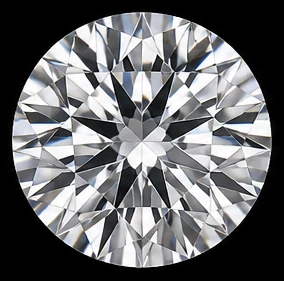
Lab-grown and mined diamonds are physically, chemically, and optically identical. Not even an expert gemologist can tell them apart without specialized laboratory equipment. The only real difference? The price tag.
| Property | Lab-Grown | Mined |
|---|---|---|
| Chemical Composition | Pure Carbon (C) | Pure Carbon (C) |
| Crystal Structure | Cubic (Isometric) | Cubic (Isometric) |
| Hardness (Mohs) | 10 / 10 | 10 / 10 |
| Refractive Index | 2.42 | 2.42 |
| Dispersion (Fire) | 0.044 | 0.044 |
| Certification | GIA / IGI | GIA / IGI |
| Brilliance & Sparkle | Identical | Identical |
| Price | 70–85% Less | Full Market Price |
| Environmental Impact | Significantly Lower | Higher (mining operations) |
| Resale Value | Growing market | Historically stronger |
Can you tell the difference? Visit our showroom and compare lab-grown and natural diamonds with expert guidance.
Select a carat weight to see the dramatic price difference between mined and lab-grown diamonds of comparable quality. The savings are real, substantial — and they let you upgrade your stone, your setting, or your honeymoon. Budget-friendly luxury is not a compromise; it’s a smart strategy.
*Prices are showroom mid-range for D–F color, VS1–VVS1 clarity, Excellent cut loose stones (any shape). Mounting adds $1,200–$2,800 for lab-grown pairings or $1,700–$4,500 for natural, depending on gold weight, pavé sides, and hidden-halo detail. Actual prices vary with specific stone characteristics. Visit our Austin showroom for exact pricing.
Lab-grown diamonds are surrounded by misconceptions. Tap any card to reveal the truth backed by gemological science.
Lab-grown diamonds ARE real diamonds — identical in every physical, chemical, and optical property. The FTC officially ruled in 2018 that they are diamonds. Same carbon atoms, same crystal structure, same hardness, same brilliance.
Even expert gemologists cannot visually distinguish them. With a refractive index of 2.42 and dispersion of 0.044 — both identical to mined — lab-grown diamonds have the exact same brilliance, fire, and scintillation. Only specialized equipment can detect origin.
GIA and IGI both certify lab-grown diamonds using the exact same 4 C’s grading system: Cut, Color, Clarity, and Carat weight. Every lab-grown diamond at Diamonds Above comes with an independent grading report.
Lab-grown diamonds score a perfect 10 on the Mohs hardness scale — the maximum possible rating, identical to mined diamonds. They will never fade, cloud, or lose their sparkle. A lab-grown diamond is truly forever.
A growing secondary market exists for lab-grown diamonds. We believe in honesty: mined diamonds historically retain more resale value. But lab-grown diamonds do hold value, and their dramatically lower purchase price means less financial risk overall.
Completely different. Cubic zirconia is zirconium dioxide — a diamond simulant. Lab-grown diamonds are pure crystallized carbon with the exact same atomic structure as mined diamonds. CZ rates 8–8.5 on Mohs; diamond is 10. They’re not even in the same category.
Lab-grown diamonds are not just the smarter financial choice — they carry a meaningfully smaller environmental footprint too. We present the facts honestly, because you deserve the full picture.
We believe in transparency: lab-grown production does consume energy, and the environmental benefit depends on the energy source used. Many leading producers now use renewable energy. We present these comparisons so you can make an informed choice that aligns with your values.
From breathtaking engagement rings to everyday elegance, our curated collection features GIA and IGI certified lab-grown diamonds in settings crafted by master jewelers — at prices that let you dream bigger. Don’t see exactly what you want? Book a design consultation and we’ll create it together.
At Diamonds Above, we carry both lab-grown and mined diamonds in our Austin showroom. We don’t push one over the other — we help you find the diamond that’s right for you. Our approach is education-first, pressure-free, and always in your best interest.
Choosing between a lab-grown and a mined diamond is a personal decision that depends on your priorities, your budget, and your values. There is no wrong answer. Both are real diamonds. Both are beautiful. Both will last a lifetime. But for many of our Austin customers, lab-grown simply makes the most sense: you get the same stunning diamond at a fraction of the cost, freeing your budget for a show-stopping setting, a larger stone, or a once-in-a-lifetime honeymoon.
What we offer at Diamonds Above is something rare in the jewelry industry: genuinely impartial guidance. Because we carry both options, we have no incentive to steer you one way or the other. Our diamond design consultants take the time to understand what matters most to you — and then help you find the stone and setting that checks every box. Book a design consultation and we’ll create your perfect ring together, from stone selection to final setting, right here in Austin.
We’ve served Austin since 1986, and our reputation is built on one thing: trust. Whether you choose lab-grown, mined, or a combination of both, you’ll walk away confident in your decision — and in the exceptional quality of your diamond. Come see us in person; there’s no substitute for holding both in your hand.
Get clear, honest answers to the most common questions about lab-grown diamonds.
Lab-grown diamonds are created using two primary methods. HPHT (High Pressure High Temperature) mimics the extreme conditions found deep within the Earth — temperatures above 2,700°F and pressure over 870,000 psi — to crystallize carbon around a diamond seed. CVD (Chemical Vapor Deposition) grows diamonds layer by layer from a carbon-rich gas plasma in a vacuum chamber. Both methods produce genuine diamonds that are identical to mined stones in every physical and chemical property.
Yes, absolutely. Lab-grown diamonds are real diamonds in every measurable way. They have the same chemical composition (pure carbon), the same crystal structure (cubic), the same hardness (10/10 Mohs), the same refractive index (2.42), and the same brilliance and fire. The Federal Trade Commission confirmed in 2018 that lab-grown diamonds are diamonds. They are not simulants like cubic zirconia or moissanite.
Not by visual inspection. Even highly trained gemologists cannot distinguish a lab-grown diamond from a mined diamond using a standard jeweler’s loupe or microscope. The only way to tell them apart is with specialized laboratory equipment that analyzes trace element patterns and crystal growth morphology. To the naked eye and standard gemological tools, they are identical.
Yes. Lab-grown diamonds are certified by the same leading gemological laboratories that grade mined diamonds, including GIA (Gemological Institute of America) and IGI (International Gemological Institute). They are evaluated using the same 4 C’s grading criteria: Cut, Color, Clarity, and Carat weight. Every lab-grown diamond we sell at Diamonds Above comes with an independent certificate.
Yes. Lab-grown diamonds have the same 10/10 Mohs hardness rating as mined diamonds, making them the hardest known material. They will never fade, cloud, scratch under normal wear, or lose their brilliance or fire over time. A lab-grown diamond will look exactly the same in 50 years as it does the day you buy it.
Lab-grown diamonds typically cost 85–90% less than mined diamonds of comparable quality (same cut, color, clarity, and carat weight). For example, a 1-carat D–F color, VS1–VVS1 clarity lab-grown diamond is $975–$1,250 in our Austin showroom, compared to around $8,500 for a similar premium mined stone. The savings increase dramatically with larger carat weights — a 2-carat lab-grown of the same premium grade is $1,750–$2,350 (versus roughly $32,000 mined), and a 5-carat lab-grown is $5,500–$8,500. Mountings add $1,200–$2,800 for lab-grown pairings or $1,700–$4,500 for natural-paired settings depending on gold weight, pavé sides, and hidden-halo detail.
Yes. We carry both lab-grown and mined diamonds because we believe you deserve options. Our diamond specialists provide pressure-free, education-first guidance to help you choose the option that best fits your budget, values, and preferences. We’ve been serving Austin since 1986, and our reputation is built on trust and transparency.
Yes. Diamonds Above offers upgrade and trade-in options for lab-grown diamonds. Whether you want a larger stone for an anniversary or simply want to upgrade your setting, we make it easy. Visit our Austin showroom or call us at (512) 206-4156 to learn about our specific upgrade policies and options.
Absolutely — and this is where lab-grown really shines. Because you save 70–85% on the center stone, you have dramatically more budget for a truly spectacular custom setting. Our Austin design consultants work with you in person to design the ring of your dreams: choose your stone, select your metal, design your setting, and see CAD renderings before anything is made. Book a design consultation at our Guadalupe Street showroom to get started.
Explore our expert guides to make the most informed decision about your lab-grown diamond.
Tell us about your vision and budget — our Austin design consultants will craft the perfect lab-grown ring for you.